lundi 2 février 2015

Luxury childrenswear in China

Luxury childrenswear in China : a market with a huge potential

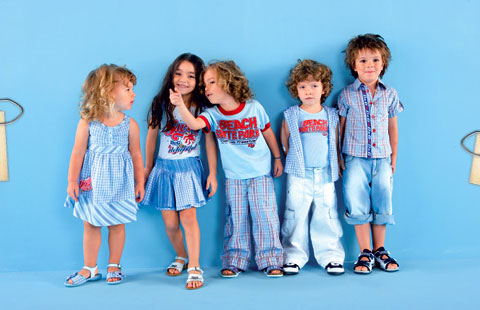
Chinese parents are a profitable market for luxury brands with China being the world's second largest consummer market of luxury consumer goods. It also turns out that they are spending more and more money on luxury clothes for their children. The China Research Centre for Children's Industry explains this phenomenon by the fact that chinese parents « transfer their preferences in luxury goods to their children ». Parents also prefer buying brands they know, such as Dior, Burburry, Armani which successfully entered the childrenswear chinese market with Baby Dior, Burburry Children, Armani Junior in 2010 and 2011.
 Parents pay attention to safety and have more trust in the quality of products released by well-known luxury brands. Moreover, the connection between your identity and the clothes you wear is very strong in today's Asia and parents want they children to be stylish and to wear recognizable brands. They look for ideas by following children fashion blogs and spoil their children who are the center of the family because of the birth control policy. Two additional reasons make parents ready to invest a lot in children's clothes. The first reason is that today's chinese parents did not access such consumption goods during their childhood under the Mao regime. Consequently, they want to give their kids products they could not own at the same age. The second reason is that young parents spend huge amount of time working. Therefore, to make up for their absence, they do not hesitate to buy costly products to their children.

For the time being, children's product does not represent a major part of the revenues for luxury companies. But luxury companies can see a bright future in this market. It did even not suffer from the economic slowdown in 2011. Besides, less material is needed for chidren clothes, making production costs lower with prices still quite high. In such a context, many other luxury children's products stores can be expected to open in China in a close future.

http://blog.euromonitor.com/2012/05/childrenswear-in-china-starting-to-become-crowded.html
http://blog.euromonitor.com/2012/09/dolce-gabbana-is-the-latest-luxury-in-childrenswear.html
http://daxueconsulting.com/market-of-childrenswear-in-china/

mardi 16 décembre 2014

The Woolmark Company in China

The Woolmark Company educating Chinese consumers about the properties of the Australian Merino wool


The Woolmark company has invested a lot in campains aimed at making Chinese consumers become familiar with the Australian Merino wool. Media events were held : for exemple, television episodes  introduced to the Chinese public the story of the prestigious fiber. In 2011, the Woolmark company began a collaboration with the Chinese clothing company the Enphants to educate Chinese consumers and make them understand the natural health benefits of merino wool for baby and mothers. With Chinese parents careful to buy quality and safeproducts for their children, the campain insisted on the properties of the naturally-moistered fiber which regulates the body temperature, prevents the skin from becoming clammy, and provides a comfortable environment to sleep. The Woolmark Company successfully presented its Mothers and Babies program’s Merino Mini collection at the Children’s, Baby and Maternity Expo (CBME) in Shanghai : this allowed the company to catch the attention of Chinese visitors who were seduced by the features of the Australian fibers previously unknown to them.


This year, the presence of the Merino Wool at the 22nd China International Clothing and Accessories Fair (CHIC) in Beijing shows the extent to which The Woolmark Company helped the Australian fiber gain momentum on the clothing Chinese market.  The Woolmark Company's Chief Strategy and Marketing Officer Rob Langtry seems very satisfied with the effects of the compains : according to him, « Chinese consumers are now showing a real interest in ingredient branding. That means not just the garment itself and the style of it, but the story behind it - how the fabric is made, where the fibre comes from, and what makes it special. »
The Woolmark Company is very confident for its future on the Chinese market and took the opportunity of exhibiting at the CHIC to go on educating Chinese consumers about the properties of the wool and to inform them of its collaboration with Chinese fashion retailers such as Youngor.

http://www.just-style.com/news/woolmark-and-eve-group-collaborate-in-china_id123729.aspx
http://www.theland.com.au/news/agriculture/sheep/wool/woolmark-spices-up-awards/2718164.aspx
http://www.vogue.com.au/fashion/news/the+2015+international+woolmark+prize+judging+panel+is+announced,34421

mardi 9 décembre 2014

The market condition for domestic wine makers

The market condition for domestic wine makers

Wine culture in China

wine culture in China

While wine consuming demand is declining in Europe, growth in the United States is dragging down, there is only 1 growth area where the market potential for wine is still up swinging: Asia. And China is the most distinctively performing wine market in Asia in terms of both volume and value growth. Now China is the fifth largest wine consumer in the world, with an emerging and growing middle class and constantly increasing demand for premium lifestyle. They are typically located in cities, holding more disposable income and are willing to spend on high quality products and have fun, and wine, especially imported wine has becomes one of pastimes that satisfy them just fine. Without a doubt, wine occupies an important place in the culture and life of Chinese people. Ordinary Chinese people have always use alcohol to celebrate the happy moments in their lives, if a baby was born for 100 days, parents would people in for a drink; when someone builds a new house, marries, starts a business, makes a fortune or lives a long life, he surely will invite people in for a drinking session. It seems also true that friendship only depends on the volume I'd drink being consumed, "if we are good friends, then bottom up; if not, then just take a "sip" "is a common phrase cited when making a toast in gatherings.
A promising domestic wine market
Even though Chinese government launched a crackdown campaign on extravagance and corruption which leads to its officials cutting back on lavish spending on premium wine either during lunch with visitors or meeting important superiors, for general public, they still enjoy the accompany of friends and wine; besides, Chinese people's drinking pattern has gone through a major change from rice or grain made wine to red or white wine due to the health benefit associated with red wine. But China's wine market seems predominated by red wine over white one. This predicts a upcoming continuous booming of wine industry. Chinese wine consumption has experienced a sharp increase in total in the past decade from 246.9 mhl to 964 mhl according to data source generated by Anderson and Nelgen In 2010. Current consumption per capital in China was 1.2 liters in 2012 and still has room for increase. The imported wine accounts for 25% of volume sales in China in 2012, with a soaring growth of wine imports from 12.5 mhl to 162mhl including bottled wine, bulk wine and sparkling wine, which confirms that China is rapidly emerging as an appealing market for foreign wine makers.

Major players in domestic wine market
Despite the thriving wine imports, China's domestic wine market remains at an early stage of development both in light of domestic wine makers and consumers. The annual consumption of wine per capita is still low compared to that in other countries. Also consumers treat wine in the very beginning as a symbol of social status, a fashion. Wines are consumed one shots after another with the objective of getting drunk rather than enjoying it slowly, even it is for luxury imported wine, more often than not, imported wine is served to impress a guest or a business partner or use as a gift. In addition, Chinese consumers are prone to separate eating with drinking, which is a simplistic mentality that requires more wine information and education.

As for domestic wine makers, it is quite obvious that Chinese wine production still has a long way to go compared with the profound historical heritage in Europe and the favorable natural conditions granted in United States, Australia and New Zealand. And it is not ready to compete with famous international brands not only in high-end wine market. Yet China's highly potentially consumer wine market gives market participants an opportunity to shape it to their advantage. There are estimated 500 wine production sites nationwide, but only 10 of them has the capability to produce more than 10,000 tons of wine annually. Moreover, only an estimated 50 wineries are able to produce wine in conformity with international quality standards. The major players in domestic wine market includes Changyu, the biggest winery in China, headquartered in Yantai, Shandong Province, which according to International Journal of Wine Research 2009 is among the main grape and wine producing areas lying in the northern part together with Shanxi, Beijing, Henan, Hebei, Tianjin, Jilin, providing around 87% of entire domestic wine supply. The company owns the oldest wine cellar in China, builds Chateau Changyu-Castel in Yantai as well as in New Zealand and operates an integrated business with their own vineyard, harvesting, crushing grapes, making it to wine and bottling it. Changyu also needs to source grapes and grape juice from independent growers for producing lower-priced products. 


Another domestic wine maker is China Great Wall, based in Hebei Province. This company not only established Vineyards in Shandong Province, but also bought vineyards in France and Chili to improve wine quality, enhance its international competitiveness, therefore to expand its business to overseas market. And its product ranges from budget-end wines to high-end ones. While Dynasty, another top brand in China's wine market, is a joint venture founded by Tianjin City Grape Garden and Remy Martin(a French winery) and presents itself as a premium wine producer. Dynasty is especially strong in coastal cities like Shanghai, Hangzhou and Suzhou. All the top local brands enjoy high brand loyalty, in the meantime, they import vine cutting technology from overseas and still focus on low-end wine market. 

By Daxue Consulting
Source:

mardi 2 décembre 2014

Distribution of the Lobster Project in China

Distribution of the Lobster Project in China

Desk research about the lobster advertising in China


Nowadays, more and more people like eating lobsters because of its high protein, and the distributors and other concerned people are paying more attention to the lobster advertising. Therefore, I will analyze the lobster advertising case from the following parts: television advertisements,digital marketing, billboard advertisements and theme activities.

Distribution in China

Television Advertisements:

Ø  Actualities:
There are a lot of restaurants and hotels selling lobsters, however, I can’t find many television advertisements about lobsters. I only find that commercials about the Tenth Session of XuyiInternational Lobster Festival in China were played on CCTV1 and News Channel.
Ø  Analysis:
There are few television advertisements about lobsters. Nowadays, the number of people that are watching TV is decreasing and the aged who generally have retired are the main part. However, the main consumer group about lobsters is income generation.Also, the advertising expenses are high.I think the reason why there is low number of television advertisements about lobsters is that there aren’t many beneficiaries and the pay is not proportional to the income.

Digital Marketing:

Ø  Actualities:
F  There are a lot of electricity companies and websites advertising and selling lobsters, such as jd( www.jd.com), taobao, alibaba and yhd(yihaodian), and they also promoting lobsters to increase its sales and popularity.
F  There are many passages and blogs online telling the benefits of eating lobsters.
F  A lot of merchants advertise their lobster menus on the group buying sites such as nuomi, wechat and dazhongdianping, and use the deals to attract customers.
F  Some merchants advertise their lobsters on the TV show pages online to get more attention.
F  They advertise all kinds of lobsters especially those imported from abroad.

Analysis:

There are various digital marketing ways to advertise lobsters and a large number of merchants are willing to advertise their lobsters on the Internet. On one hand, adults and teenagers are more likely to surf the Internet, on the other hand, the advertising expense on the Internet is relatively lower. So the merchants can get more profits and cost less.

Billboard advertisements:

Ø  Actualities:
F  There are a lot of billboard advertisements about lobsters when the Lobster Festival is coming. The billboards are mainly distributed on the subway stations such as Xujiahui Station.
F  The merchants who advertise lobsters by billboards are mainly electric companies and upscale hotels. 
F  The color of billboards advertising lobsters is bright and patterns are superior in quality, which can attract busy persons’ attention and increase their appetites.
Ø  Analysis:
The billboards on the subway station can be seen by thousands of people every day, and it is the best way to advertise and popularize lobsters. Also, the merchants who advertise lobsters by billboards are often financially strong companies for the expenses are so high that small shopkeepers cannot afford it. Therefore, the merchants advertising lobsters via billboards should take the proper advertising timing into account.

Theme Activities:

Ø  Actualities:
F  Xuyi International Lobster Festival in China has been held from 2001 and it isheld every year.
F  Rocky Liang, Michael Minhong Yu, Faqiang Shang all recommend the book “How to Sell Lobsters” (It is a kind of metaphor but propagandizes lobsters in some way.)
F  4th Hubei Qianjiang Lobster Festival in China has been held on 12th June, 2014.
F  Hefei Lobster Festival in China has been held from 2002 and it is held every year.
F  The participators are mostly manufacturers, vendors and local residents.
Ø  Analysis:
There are some large continuous lobster celebrations in Chinabeing held every year and they have made lobsters more popularization. These celebrations are more promoting the lobster culture and offer time to people for gathering together, which can advertise lobsters and also increase the sales because people in China always have a great meal when they have festivals or parties.Therefore, we can increase the number of lobster festivals and the scale of the celebrations to enhance people’s awareness of lobsters.

Conclusions:

The number of lobster sales in China has a profound prospect and the lobster advertising in China is not saturation. Therefore, the merchants can enhance the lobster advertising in China. From the analysis above, digital marketing advertising and billboards advertisements are the better ways to advertise lobsters. Theme activities can improve the local lobsters’ reputation. Television advertisements relatively seem to be a non-ideal way for now.
China is a masculine society now and 23% people in China prefer to surfing on the Internet. Also people in China often entertain guests with lobsters and send lobsters as gifts to friends and colleagues because they believe lobsters are the proper gifts.What’s more, almost a hundred million people go out every day. Therefore, we can put more efforts on advertising lobsters via digital marketing and billboards, and create some new festivals and activities to disseminate the culture of lobsters.
Daxue Consulting


lundi 29 septembre 2014

How to sell in China ?

How to sell in China ?


You really want to have an overview? So click on this video .


source

Market research

Market research is a necessity to set up business in China. This study should be made ​​here in China with our experience and that of our Chinese services. From this study we can give you our opinion on the possibility of exporting your product or services in China. Of course there are areas such as luxury food products, wine, innovative products, restoration, some services that are "carriers" in the Chinese market, however, we have often been surprised at the reaction of our consultants Chinese on certain types of products ...
It is nevertheless true that China is open to consumption and the tank of people "large purchasing power" increases exponentially in China. There would in 2012 almost 1 million millionaires in USD! Some studies even show that China could dethrone in consumption the United States in 2020 (Study Credit Suisse). Some brands of German "big guns" have fully integrated the Chinese market for these brands is their first world market BEFORE Germany! Francophone countries have an immense growth driver provided you follow the typical Chinese cultural and ride the good image that the Chinese have some of our products. Rely on experience
China A marketing strategy is essential adapted to Chinese culture To think marketing in China, we must first remember how you maketer your products in the West. Here, the offers of goods, services or ideas must be managed according to Chinese motivations CONSUMERS and typical segmentation of China. Many brands wishing to operate in China "on-the-hurry" were cruel disillusionment. A serious marketing study with precise targeting is imperative.

The preparation of concrete solutions, partnerships

Doing Business in China is no more difficult than in the West, it's just very different. Treat China as any Western market is going to fail. Some brands have understood and skillfully use the behavior of both consumers and buyers to successfully build partnerships and to break into the Chinese market. CHINA SERVICE offers his help to study and implement a Chinese concrete implementation.
3) The importance of Guanxis China (relational)
After the product and marketing, it is vital concept to be integrated sil we want to do business in China: "Guanxi" or relational. This notion in the business in China really different from anywhere else in the world. Here a good personal relationship with the client or even the buyer often means is essential. Not understanding this "cultural" Chinese concept is to miss the number of cases, or even never succeed in business in China.

view also distribution in China


mercredi 23 juillet 2014

Name of Carrefour in China

Name of Carrefour in China

The giant of the distribution accuses his Chinese competitor, the supermarket chain Anhui Jiale, of having used his name and his logo between 2002 and 2009.

Fight for a name in China

distribution in CHina


 Everything began when Carrefour began a vast market study concerning the region of Fuyang, in the province of Anhui (is from China). The group then noticed that about 160 supermarkets already raised its name and logo, tells the official Chinese agency Xinhua. In reality, these stores belong to the Chinese retail chain Anhui Jiale, based in 2002 and implanted in the region of Fuyang. The Chinese official name of Carrefour being phonetically translated "Jialefu", the French group considered that its local competitor had usurped his name and his logo.
The French giant of supermarkets, based in Paris, had to catch himself to believe in it having led an investigation of market in the city of Fuyang, in the province of Anhui, in the east of China. There are already 160 Jialefu stores in this city.

Carrefour has many store in China

name in China
Carrefour lodged a complaint in justice against Anhui Jiale Supermarket Chain Co Ltd and his(her) subsidiaries to Fuyang, accusing them of having used illegally the logo " Jialefu ", the version quibbles of "Carrefour”, both in the name of the company and in its commercial activities. The Popular Intermediate Court of Hefei agreed to receive the complaint. The hearings in front of the court, which began August 18th of this year, are always in class.
Daxue Consulting
Jiale, created in 2002, which changed its name of "Jialefu" in "Jiale" in August, 2009 forbids to have encroached on the registered trademark Carrefour, because it changed its name of "Jialefu" in "Jiale" before the complaint is put down. Jiale also supports that the Chinese logo of Carrefour, "Jialefu", means literally in Chinese " happy family " and that it misses that that elements identifiers which possesses a distinctive trademark.
Since its arrival on the Chinese continental market in 1995, Carrefour opened 157 stores and intends to carry the number in 185 by the end of this year.

vendredi 4 juillet 2014

A giant of distribution in China

A giant of distribution in China

Costa coffee china
In China, they are everywhere. Costa coffee is in the slightest village of province, in the smallest grocer's shop of street. It do the distribution in China of minute noodles in the flashy conditioning. Costa Coffee Mix a bag of spicy(spices and ingredients freeze-dried, supplied with there. Add some boiling water: it is one of the meals on the thumb the most common from all kind of distribution in China. It is also an inescapable logo, a small character smiling to the chef's hat: Costa Coffee. In 2011, TNS had calculated that it was the second brand the most valued in China, behind Sony.
Costa coffee is the first Chinese industrialist of the food-processing industry to be represented in this world ranking in term of distribution, established by the consulting firm OC and C. But others should follow from the next year. "  In 2014, we already know that both Chinese milkmen, Yili and Mengniu, will enter the world Top 50  ", asserts Jean-Daniel Pick of the cabinet OC and C. Mengniu is the partner of Danone in China. The French leader recently doubled his participation in the group Mengniu in 9,9  %, for 486 million euros.
By putting the hand on Smithfield, giant of the porcine meat, owner of Cochonou and Justin Bridou, the Chinese WH marked, year 2013 too. It is the biggest American acquisition, never realized by a Chinese for more than 7 billion dollars.

Distribution of Costa Coffee in China

distribution in China

It followed, of a few months, the repurchase of Weetabix, the American group of cereal for the breakfast by the Chinese Bright Food, the unfortunate candidate for the repurchase of Yoplait. These last years, Chinese offered themselves small about ten foreign groups in the sector of the consumer goods a year. Their accumulated amount passed from 717 million dollars in 2011 to 8 billion in 2013, according to the cabinet Dialogic, which did a market research on distribution in China